



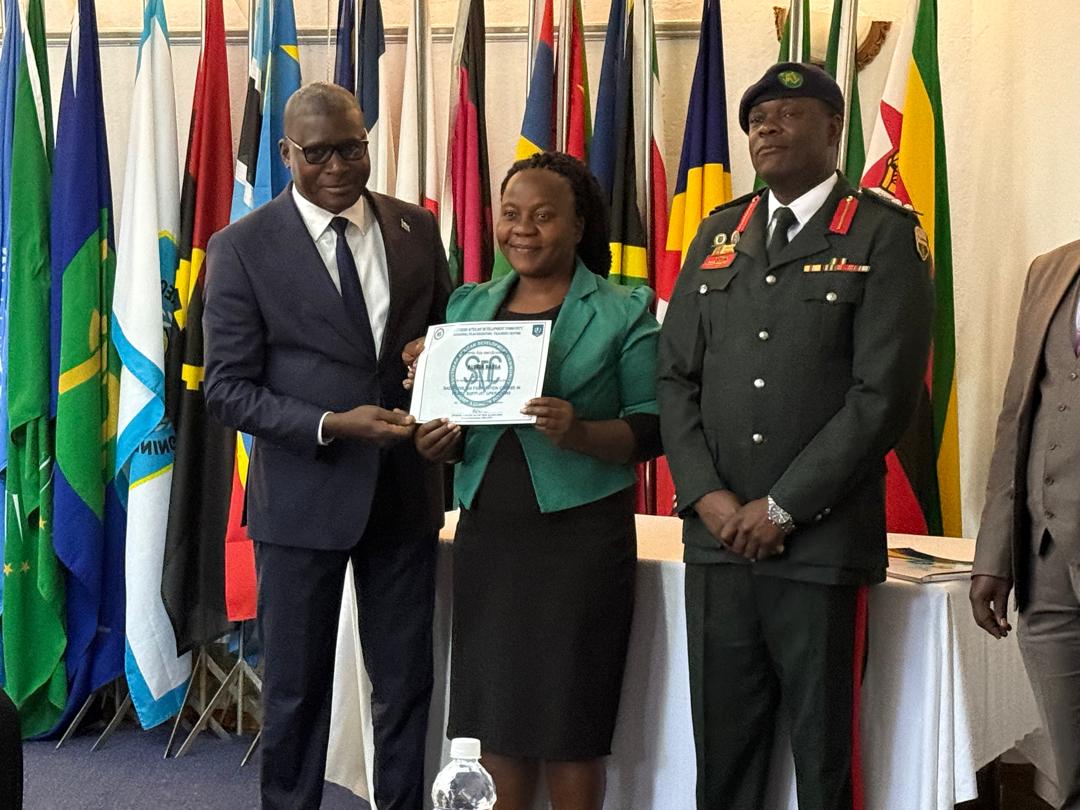
Story by Memory Chamisa
HARARE – The Civilian Foundation Course in Peace Support Operations ended this Friday at the SADC Regional Peacekeeping Training Centre (RPTC) in Harare, with renewed commitment to planning and implementation of the protection of civilians and peace support operations.
The course witnessed more females in attendance with 16 constituting the class out of 31 participants.
This is reflective of the SADC RPTC mandate of gender balance in peace support operations.
Some of the graduates spoke on the importance of the course in maintaining peace among communities in a world of conflict.
“We learnt that as a peacekeeper you do have a lot of contact with the civilian population and their concerns, their culture, their needs. Most of our missions have deteriorated political and security environments hence the need to be prepared to handle the situation, said a graduate, Lieutenant Godknows Vakayi.
Another graduate, Commissioner Happiness Francis noted, “As a woman, the past two weeks have been fulfilling and inspiring for l learnt a lot from my colleagues in the SADC region and the dynamics of peacekeeping in a technologically advanced world. I am confident what I have learnt here, I will be able to implement back home.”
Acting Commandant SADC RPTC Colonel Coleen Mafika applauded the graduates for their zeal in learning the dynamics of peace operations.
“The aim of this course was to build capacities for the civilian component with the view to prepare them for future peace support operations. In this regard, the SADC Regional Peacekeeping Training Centre acknowledges the support from SADC,” said Colonel Mafika.
Guest of Honour, Charge D’Affaires Embassy of the Democratic Republic of Congo in Zimbabwe, His Excellency Mr Michel Kama Mipwele stressed the importance of nurturing hope and love within communities for peace to thrive.
“You must listen deeply and emphatically to the voices of those you serve , develop a big heart to understand the issues, positions and interests at stake. Every community has it’s unique history, challenges and aspirations, by respecting and honouring these perspectives you will gain trust and collaboration that are essential for effective mandate implementation,” he said.
The two-week course also included participants from eight SADC member states.

