



Story by Tamuka Charakupa
THE Government has called on employers to adopt emerging technologies, particularly Artificial Intelligence (AI), to improve safety standards and protect employees in the workplace.
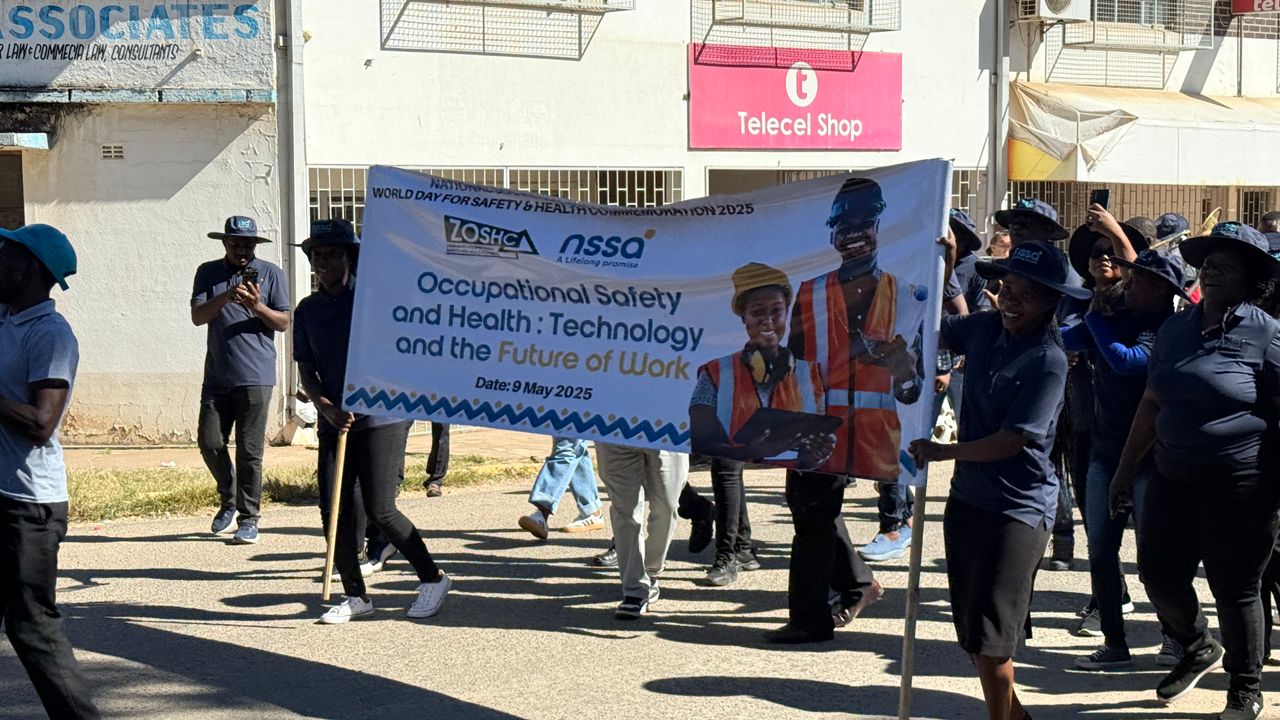
This year’s belated World Day for Safety and Health at Work commemorations were held in Chinhoyi, with a strong emphasis on deploying innovative strategies to prevent occupational hazards and promote a culture of safety.
In a speech during the event, Deputy Minister of Public Service, Labour and Social Welfare, Honourable Mercy Dinha, urged the National Social Security Authority (NSSA) and employers to begin investing in digital infrastructure that will enhance occupational safety and health (OSH) monitoring and enforcement.
“I would want to urge NSSA to start investing in digital infrastructure that helps improve OSH monitoring and compliance enforcement. Using AI-powered reporting tools, it is possible to track real-time workplace incidents and better inform policy interventions. Additionally, my Ministry will continue to promote OSH research and capacity-building initiatives to ensure Zimbabwean workers and employers alike are prepared for the future of work.
“As we commemorate this important day, I call upon our social partners, Organised Business and Organised Labour to actively participate in shaping the future of OSH in our country. Employers must embrace technological innovations that promote safety while ensuring fair working conditions. Labour unions must continue advocating for worker protection that addresses the risks associated with automation and AI integration. Deputy Minister, Public Service, Labour and Social Welfare Honourable Mercy Dinha said.
“The Government remains committed to creating a regulatory environment that supports innovation while safeguarding the rights and well-being of our workers. The Government of Zimbabwe is fully dedicated to protecting the safety and health of all workers in the country, as demonstrated by our ratification of several key occupational safety and health conventions.
“To date, we have ratified six conventions, including Convention No. 155 on Occupational Safety and Health. Moreover, we are actively working towards ratifying Convention No. 187, the Promotional Framework for Occupational Safety and Health Convention, which will further bolster and galvanise our commitment to OSH standards and practices. Once ratified, this convention will strengthen our national policy framework by fostering a preventative safety and health culture in Zimbabwe.”
Various labour organisations also gave their solidarity messages.
“A total of 3 910 disabling injuries and 59 fatalities were recorded in 2024 compared to 4 067 disabling injuries and 57 fatalities recorded during the same period in 2023. The top ten injury and fatality contributors were personal services, mining and quarrying, food and beverage processing, local authorities, transport and storage, metal production, electricity production, building and construction, and commerce and distribution. It, therefore, follows that future enforcement and promotional programs should target these critical sectors,” Zimbabwe Congress of Trade Unions, President, Mrs Florence Taruvinga said.
“Advanced robotics and automation, the use of virtual and extended reality, as well as nevi tools such as smart wearable devices that provide real-time risk detection or environmental sensors that track air quality, are transforming safety and health by preventing accidents and reducing hazardous exposures,” International Labour Organisation, Dr Betty Nyereyegona said.
“Furthermore, digitalisation is leading to the rise of hybrid and remote work arrangements that are creating flexibility and improving mental health. While robots effectively take on hazardous tasks, workers who maintain, repair, or collaborate with these machines may face new dangers. Unpredictable robotic behaviours, system failures, or cyber threats can compromise safety. Ergonomic risks may arise from human-robot interaction, as well as from the use of wearables and exoskeletons that lack proper fit, usability, or comfort.”
Official statistics indicate the country recorded 720 injuries and 12 deaths in January and February alone, pointing to the need for stakeholders to work towards improving workspace safety both in the public and private sectors.

