



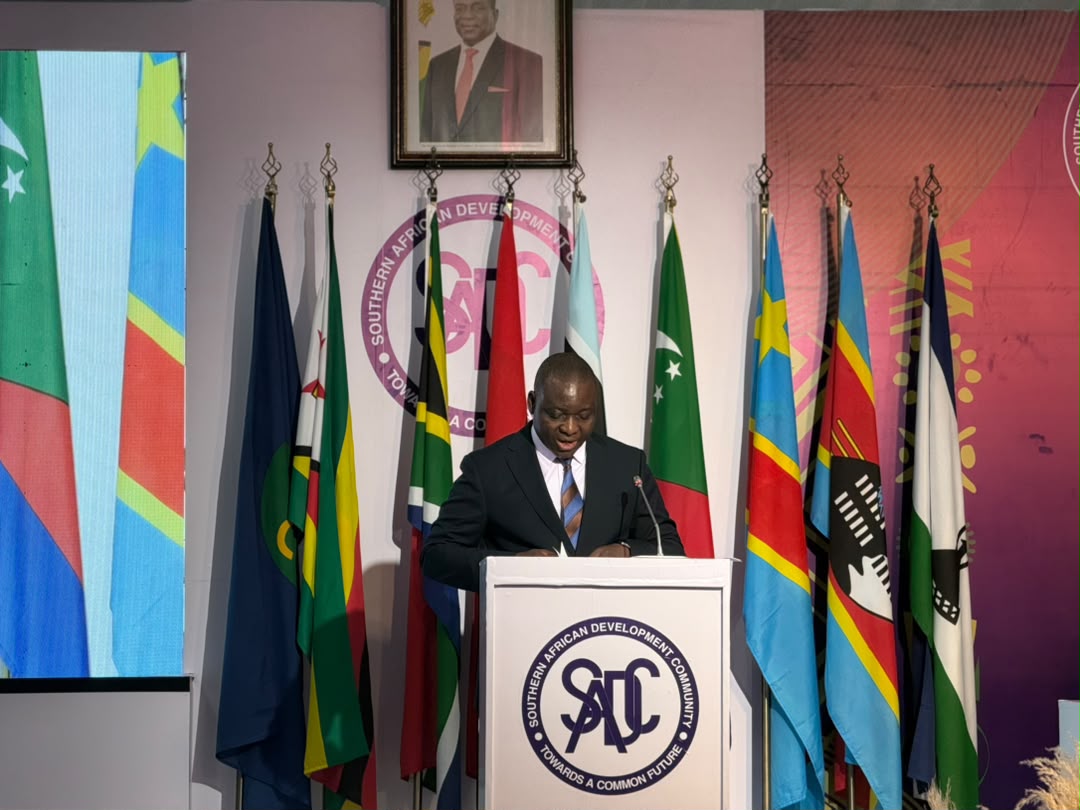
Story by Lisa Masuku-Kurira
THE Southern African Development Community (SADC) Meeting of Ministers Responsible for Transport, ICT, Information, and Meteorology ended with a resolution for member states to strengthen regional cooperation for economic development.
The five-day SADC Cluster Meeting ended in Bulawayo this Friday with member states committing to accelerate regional integration through the harmonisation of policies in the transport, digital and meteorology sectors.
“The SADC Secretariat has embarked on a study to develop a Regional Railway Masterplan and bankable investment plan, to rebalance the modal share of road versus rail, which is unsustainably skewed to road. The Secretariat is also undertaking a scoping study to understand the needs of the Maritime sector to develop a Maritime Corridor Strategy and enhance maritime shipping operations that heavily contribute to the economy of our region,” SADC Deputy Executive Secretary- Regional Integration, Ms Angèle Makombo N’Tumba said.
There was consensus that the SADC trade and transport facilitation project funded by the African Development Bank continues to play a crucial role in improving the efficiency of the North-South corridor in line with enhancing regional trade.
“The meeting reminds us to sustain implementation and ensure full implementation of our decisions. Honourable delegates, the SADC trade and transport facilitation project supported by the African Development Bank continued to play a critical role in advancing regional integration through investment in customs, interconnectivity, transit management systems, cross border cooperation and regional railway planning and the efficiency of the North-South corridor and other strategic routes are hereby strengthened.
“The ongoing work on the railway master plan to support infrastructure development, upgrades and reforms is some of the critical works meant to significantly improve trade flows,” Chairperson of the Committee of Ministers Responsible for Transport, ICT, Information and Meteorology, Hon Barbara Creecy said.
“The idea of regional integration cannot be overemphasised. If you look at the North-South corridor, where we are rehabilitating the Beitbridge-Harare. Soon we will be starting on the Harare-Chirundu. We also look at Walvis Bay, where we are going to be connecting with Namibia,” Minister of Transport and Infrastructural Development, Honourable Felix Mhona said.
Zimbabwe is convinced the collective defence and mutual support that defines SADC will help the region achieve its broader vision of a more connected and resilient Southern Africa.
“The achievements we celebrate today are the result of collective effort. Every road we rehabilitate, every digital platform we establish, every broadcast we coordinate and every weather system we improve contributes to the broader vision of a more integrated, connected and resilient Southern Africa,” Minister of Information, Publicity and Broadcasting Services, Honourable Zhemu Soda said.
In the ICT sector, over 20 decisions that are in line with the Development of the SADC Model Data Strategy and Action Plan were adopted.
“The aspect worth noting is the issue of the desire to put every member state at an equal level of understanding of the application of early warning systems in averting disasters in the region,” Deputy Minister of Information Communication Technology, Postal and Courier Services, Honourable Dingumuzi Phuti said.
SADC member states commended Zimbabwe for its steadfast commitment to regional cooperation after graciously hosting two consecutive SADC Cluster Meetings of Ministers Responsible for Transport, ICT, Information and Meteorology

