



Story by Silence Mugadzaweta, Online Editor
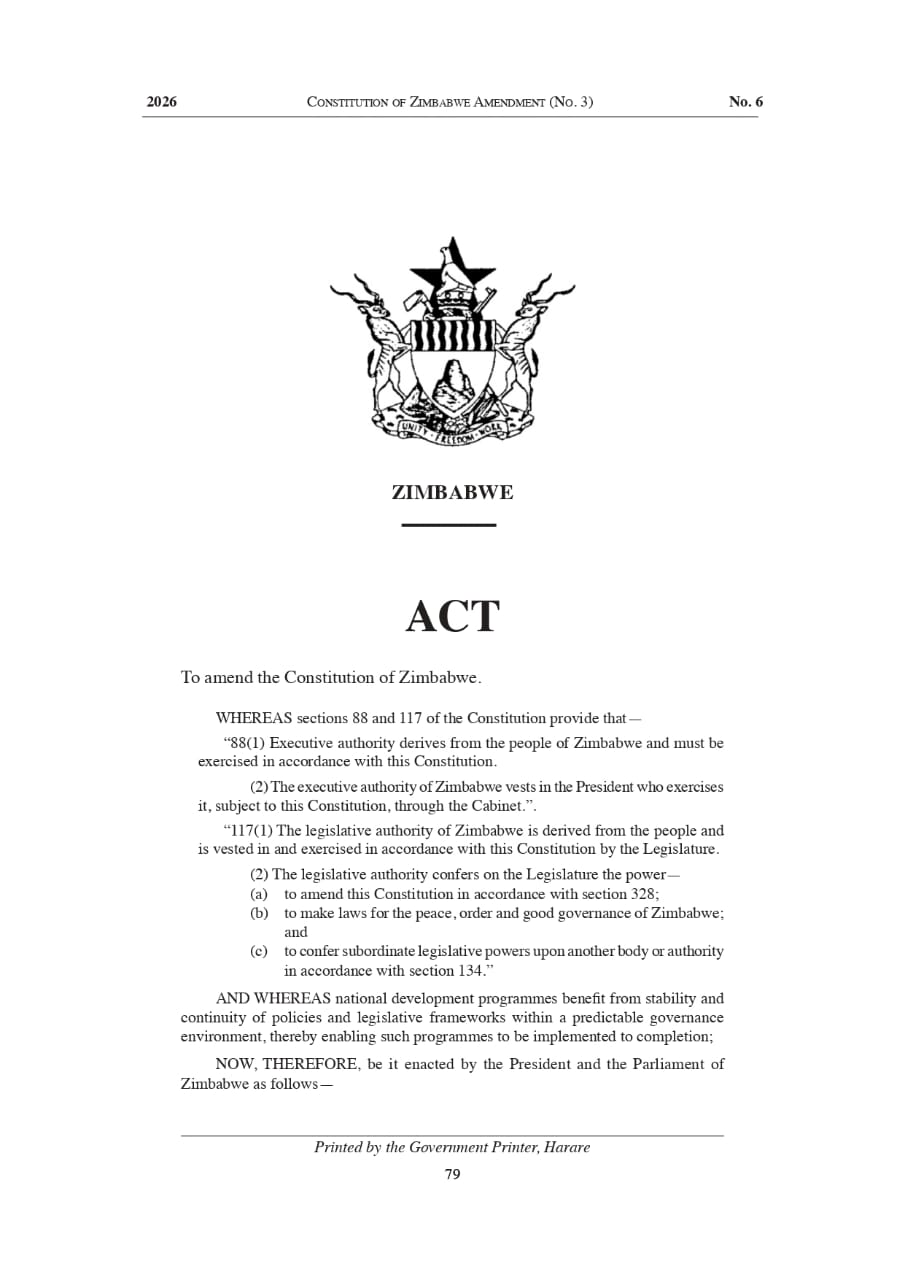
PRESIDENT Dr Emmerson Mnangagwa has signed the Constitution Amendment No. 3 Bill into law, with the legislation taking effect following its publication in an Extraordinary Government Gazette.
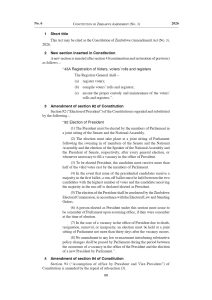
The enactment gives legal effect to a series of constitutional amendments adopted by Parliament, paving the way for changes to key state institutions as Zimbabwe continues implementing governance reforms.
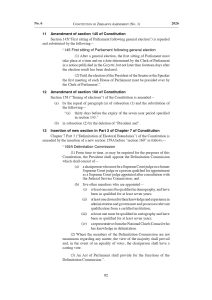
Among the major changes, the Act establishes a Delimitation Commission to assume responsibility for constituency and ward delimitation, replacing the Zimbabwe Electoral Commission in that role. It also extends the period for completing delimitation exercises from six months to eighteen months.
The legislation also restructures the leadership of the superior courts by creating the office of Judge President of the Supreme Court, while separating the administration of the Constitutional Court and the Supreme Court. The Chief Justice will head the Constitutional Court, with the Judge President assuming responsibility for the Supreme Court.
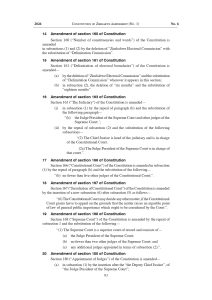
The Constitutional Court’s jurisdiction has also been broadened, enabling it to hear matters raising arguable points of law of general public importance where leave to appeal has been granted.
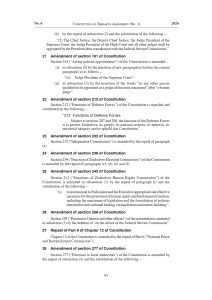
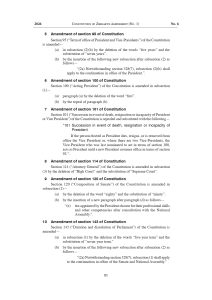
The Act revises judicial appointment procedures, updates the constitutional mandate of the Defence Forces and removes the National Peace and Reconciliation Commission from the Constitution. It also amends provisions governing the Zimbabwe Human Rights Commission and the Prosecutor-General.
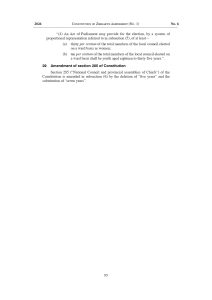
In local government, the amendment provides for proportional representation seats reserved for women and young people in local authorities, while the tenure of the National Council and provincial assemblies of chiefs has been extended from five to seven years.
The constitutional amendments take effect in accordance with the provisions of Act No. 6 of 2026 as published in the Extraordinary Government Gazette.

