



Story by Abigirl Tembo, Health Editor
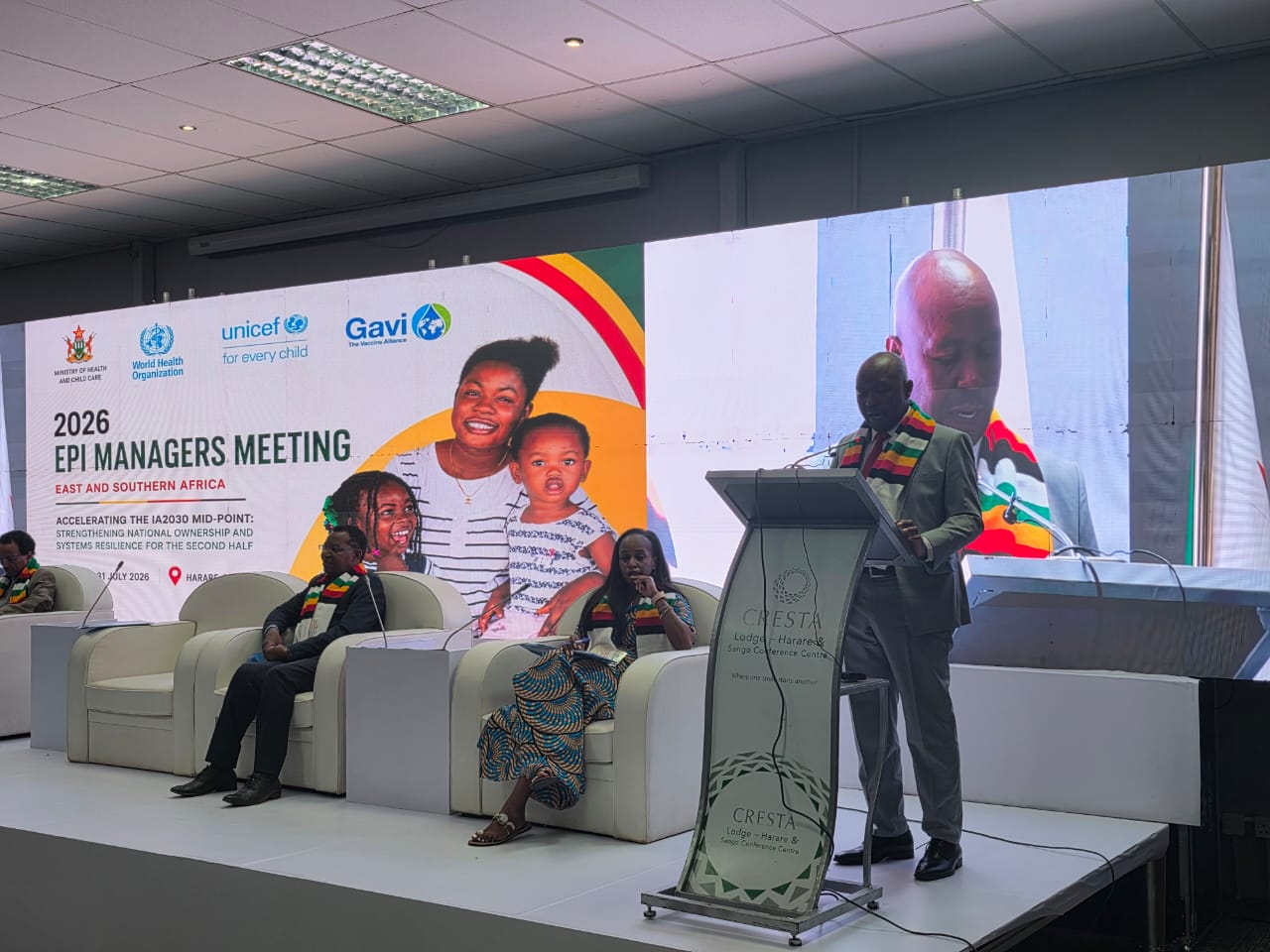
ZIMBABWE is hosting senior immunisation experts and development partners from 21 countries at the Eastern and Southern Africa Expanded Programme on Immunisation (EPI) Managers’ Annual Meeting, as the region seeks to improve vaccine coverage, reach zero-dose children and counter growing misinformation.
The meeting has brought together delegates from 21 countries alongside representatives from the World Health Organisation (WHO), UNICEF, Gavi, the Bill and Melinda Gates Foundation, Rotary International and other partners to review immunisation performance, exchange best practices and strengthen vaccine delivery, financing and public confidence.
Opening the conference, Permanent Secretary in the Ministry of Health and Child Care, Dr Aspect Maunganidze said Zimbabwe remains committed to ensuring every child has access to life-saving vaccines in line with the National Development Strategy Two (NDS2), the National Health Strategy and the country’s Universal Health Coverage agenda.
“Every child, regardless of where they are born or live, deserves the protection that modern vaccines provide. This is in line with President Dr Emmerson Mnangagwa’s commitment to leaving no one and no place behind. Government continues to prioritise immunisation through domestic financing because vaccination is one of the smartest investments a nation can make,” he said.
Development partners commended Zimbabwe for sustaining one of the region’s strongest immunisation programmes despite mounting global funding pressures.
UNICEF Country Representative Ms Etona Ekole said Zimbabwe’s continued investment in vaccines has strengthened immunisation coverage.
“The Government of Zimbabwe has demonstrated strong commitment by ensuring vaccines are available through domestic financing. UNICEF supports these efforts through cold chain equipment, training frontline health workers and providing transport to reach remote communities. National immunisation coverage now stands at around 94 per cent, making Zimbabwe one of the best performers in the sub-region, although we remain focused on reaching every zero-dose child,” she said.
WHO Country Representative Dr Desta Tiruneh said Zimbabwe continues to outperform the regional average on most immunisation indicators but warned that misinformation poses a growing threat.
“Zimbabwe’s immunisation programme is performing above the regional average and, if current progress is sustained, the country is well positioned to achieve its 2030 immunisation targets. One of the greatest challenges we face today is misinformation on social media. We urge the public to verify vaccine information with qualified health professionals rather than relying on unverified social media content,” he said.
WHO Eastern and Southern Africa Regional Office representative Sarah Wonyioke said Zimbabwe was selected to host the annual meeting because of its strong immunisation performance.
“Zimbabwe is ranked fourth in the sub-region for immunisation performance. We are here to understand the investments, partnerships, health systems and leadership that have contributed to this success so that other countries can learn from Zimbabwe’s experience,” she said.
The meeting is reviewing progress towards eliminating vaccine-preventable diseases and achieving Universal Health Coverage by 2030, with delegates identifying sustained domestic investment, stronger community engagement and regional collaboration as key to ensuring every child has access to life-saving vaccines.

