



Story by Josephine Mugiyo, Diplomatic Correspondent
COOPERATION between Zimbabwe and Equatorial Guinea has been taken to another level with new agreements having been signed at the inaugural Joint Permanent Commission of Cooperation in Harare this Friday.
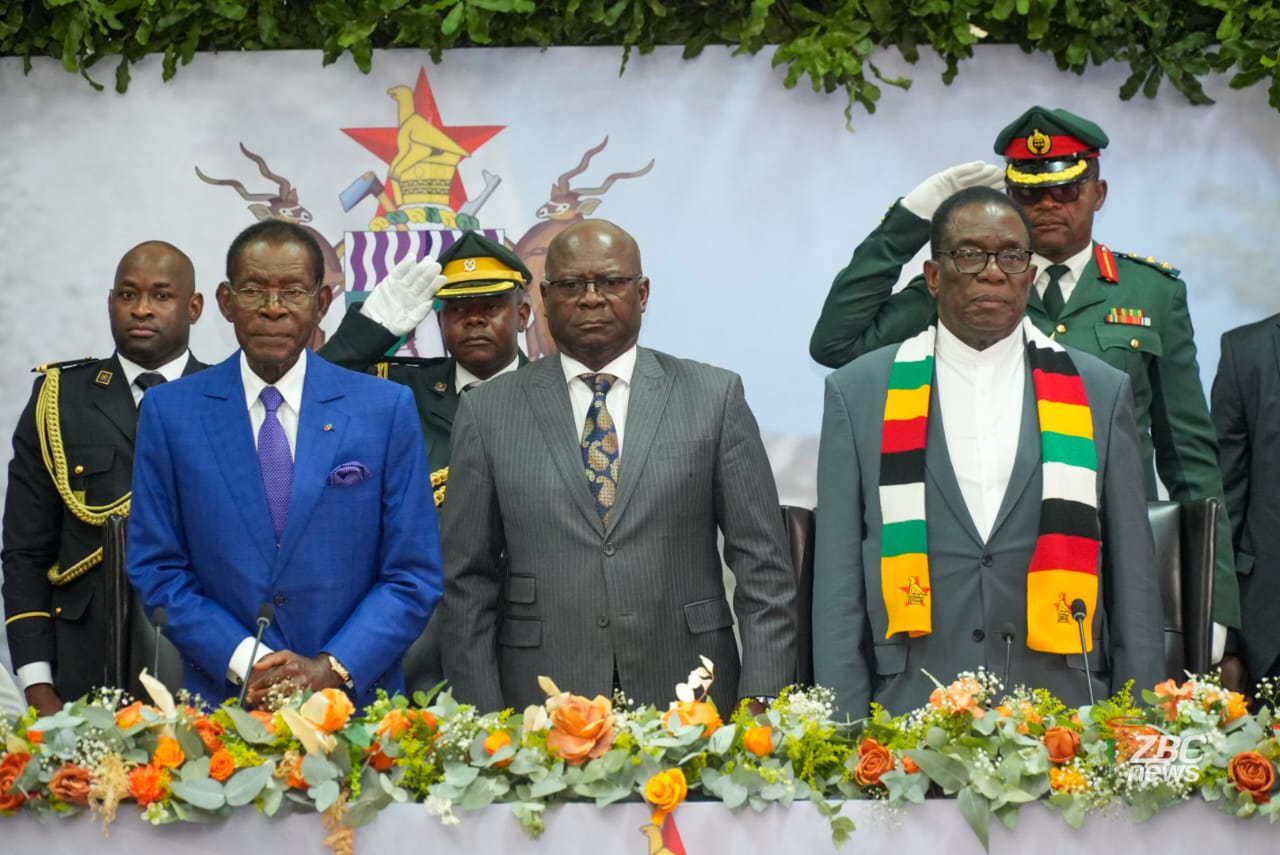
Four new agreements were signed at the State House, with visiting Equatorial Guinea President His Excellency Teodoro Obiang Nguema Mbasogo and President Dr Emmerson Mnangagwa witnessing the signing ceremony.
The visit by the President of the Republic of Equatorial Guinea has been described as historic by his counterpart, President Mnangagwa.
Having arrived in Harare this Thursday, President Mbasogo attended a state banquet on Thursday and this Friday, he was part of the bilateral meeting together with his counterpart at the state house.
The meeting saw the signing of four agreements that will further deepen the cooperation that already exists between the two sisterly republics.
First to be signed was an MOU on cooperation in the field of education, while an agreement on trade and economic cooperation was also signed.
In the field of languages, a Memorandum of Understanding on cooperation in the training of translators and interpreters was signed, with the last MOU being on the rules of procedure of the joint commission of cooperation.
Minister of Foreign Affairs and International Trade, Professor Amon Murwira, said the agreements reflect a structured approach to deepening relations, beginning with political trust before expanding into economic cooperation.
“This was the first Joint Permanent Commission of Cooperation between Zimbabwe and Equatorial Guinea. Our first agreement was about diplomatic and political relations. As you know, the first layer of relationship is political and diplomatic. And then the second is economic and trade agreement, which means, upon a good and excellent political and diplomatic environment, it makes economics and trade possible,” he said.
He added that education and skills development remain central pillars of the cooperation framework, in line with Zimbabwe’s broader foreign policy objectives in science, technology, innovation and culture.
The Minister also emphasised the importance of monitoring implementation to ensure the agreements translate into tangible results.
The two Heads of State agreed on the need to ensure speedy implementation of these agreements, and it was agreed that mechanisms be put in place to ensure this is monitored.
“Their excellencies are asking about implementation, our monitoring mechanism is a mid-term review to see how far we have moved in terms of implementation… we just do not want to sign for signing sake,” he said.
He further noted that strengthened bilateral relations are expected to contribute to increased trade flows, citing Zimbabwe’s export growth trajectory in recent years as evidence of expanding international economic engagement.
“I will always say international trade happens when there are two partners that trust each other and we believe that this is important. Through this approach, His Excellency was able to grow exports for Zimbabwe. We expect trade figures to grow even more as we relate with countries like Equatorial Guinea, which are petroleum-rich.”
After the bilateral meetings and signing of the MOUs, it was time for President Mbasogo to return home, but before that, he made a brief stopover at the National Heroes Acre, where he was given a brief history of the place and its significance.
After that, President Mbasogo headed for the airport where he was seen off by President Mnangagwa, Service Chiefs, as well as senior Government officials.
As he returns home to Malabo, relations between the two sister nations have been cemented and cooperation is expected to continue.

