



Story by Tichaona Kurewa
THE Kavango-Zambezi Transfrontier Conservation Area (KAZA TFCA) Ministerial Committee has reaffirmed its commitment to strengthening regional conservation, wildlife connectivity, and sustainable financing across southern Africa’s largest conservation landscape.
This was highlighted in the Joint Communiqué adopted at the conclusion of the 16th KAZA TFCA Ministerial Committee Meeting, which ended in Victoria Falls this Friday.
The week-long KAZA TFCA Ministerial Committee Meeting, which began on Monday, deliberated on a wide range of issues affecting conservation and sustainable development in the region.
Key topics included wildlife management, transboundary conservation, resource mobilisation, tourism development, and calls for greater authority by member states over wildlife management and trade, amid concerns that international restrictions continue to impact regional conservation efforts.
Resource mobilisation emerged as a top priority, with ministers emphasising the need to strengthen the region’s capacity to finance its own conservation initiatives.
“The strengthened strategic resource mobilisation and proactive leveraging of existing and forthcoming financing opportunities, particularly the Africa Keystone Protected Area Partnership (AKPAP) and the Global Environment Facility (GEF-9) funding cycle, to mobilise resources for capitalising the proposed KAZA Conservation Trust Fund (CTF), building on the approved project preparation grant under the Global Biodiversity Framework Fund.
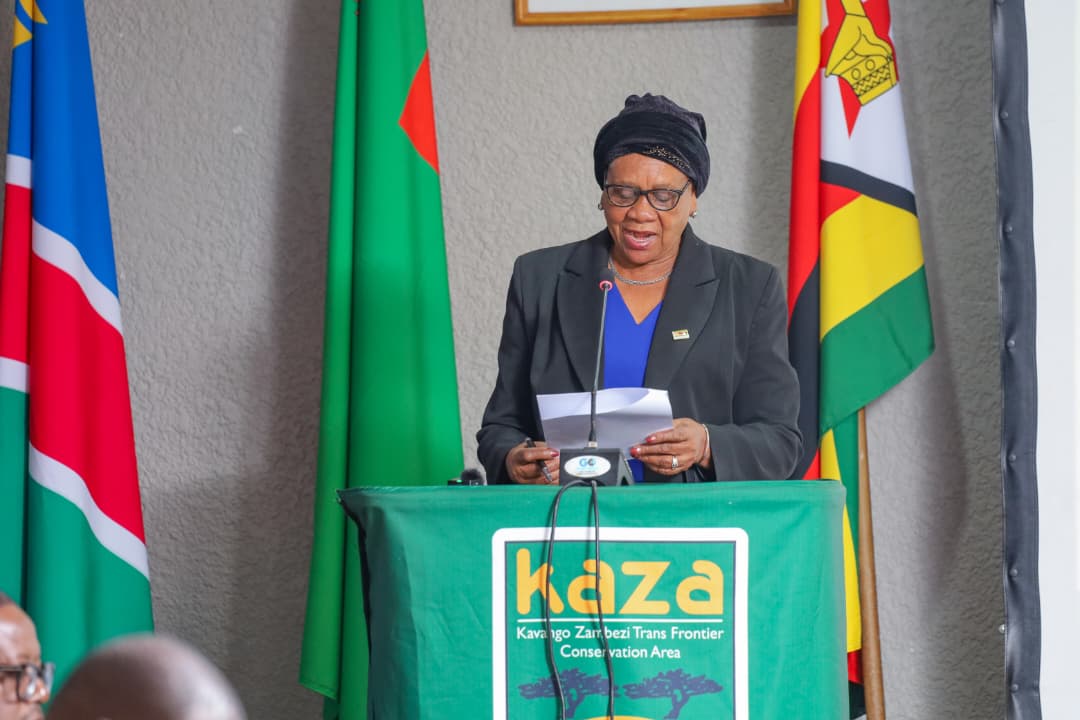
“The initiation of technical planning and strengthened strategic resource mobilisation to support a follow-up, synchronised and coordinated survey of large herbivores across the KAZA landscape as a strategic transboundary intervention,” the Minister of Environment, Climate and Wildlife-Zimbabwe, and current Chair of the KAZA TFCA Ministerial Committee, Honourable Dr Evelyn Ndlovu said.
The meeting also reviewed progress in implementing resolutions from the 2024 Heads of State Summit, strengthening transboundary law enforcement, expanding tourism products, and securing new international partnerships and funding opportunities.
“There is an expectation now that the Secretariat and the technical team will then move forward and make sure that they actualise that which is in the research value community. So basically that’s what, as ministers, we expect to see happening,” Botswana’s Minister of Environment and Tourism, Honourable Wynter Boipuso Mmolotsi said.
“Our main aim is conservation, as the five countries and I believe we are doing well in that area.We will continue to do so as the five countries,”Namibia’s Deputy Minister of Environment, Forestry and Tourism, Honourable Anselm Marungu said.
The outcomes of the Victoria Falls meeting are expected to influence future debates at the Convention on International Trade in Endangered Species (CITES), where Southern African countries have consistently argued for a greater role in managing and utilising their elephant populations and other wildlife resources.
KAZA TFCA is a five-country conservation initiative covering more than 500 000 square kilometres and is home to an estimated half of Africa’s remaining elephants, making it one of the world’s most important wildlife conservation landscapes. Member states include Angola, Botswana, Namibia, Zambia, and Zimbabwe.

