



Story by Mercy Bofu-Matinha
COMMUNAL farmers across Zimbabwe are praising the government’s village-based Farmer Field Schools for significantly contributing to increased agricultural productivity and improved livelihoods.
Among the success stories is Mr Ishmael Kanjera of the Tongoona area in Bikita East, who adopted the Pfumvudza/Intwasa conservation farming model in 2017.
Starting with a single plot, Kanjera and his family have since expanded to seven plots, including four dedicated to maize. Their homestead has also become a hub of agricultural learning, hosting a local Farmer Field School where other farmers benefit from the expertise of agricultural extension officers.
“Firstly, I want to thank our government for introducing the pfumvudza programme. I have got a very big family with 16 children and before we used to struggle for food as a family, however after harvesting our one plot we started increasing hectarage and we have been producing enough for our family and surplus. Other farmers have been coming to learn here and as a community leader, I have seen that many families are now food secure,” farmer, Mr Ishmael Kanjera said.
“Since we started the pfumvudza programme, we are now able to send our children to school and with the surplus we have even managed to buy a stand in Nyika area and we are currently building a big house. Back home, as you can see we are no longer struggling, we have got several poultry and horticultural projects running,” farmer, Ms Happiness Kanjera said.
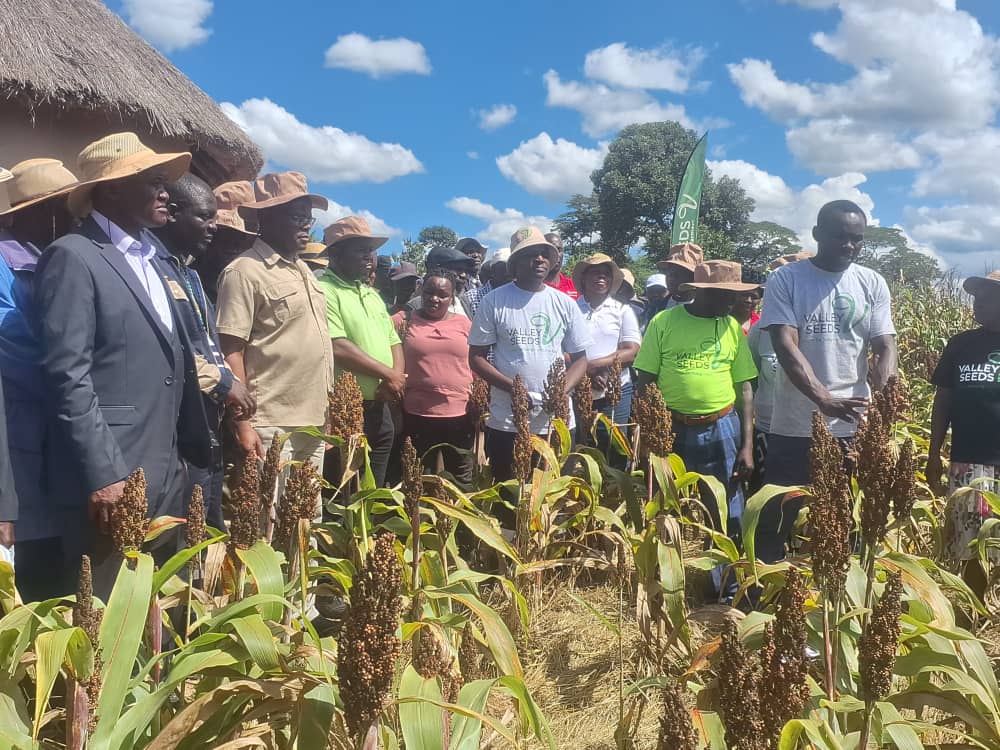
A field day was held at the Kanjera homestead with government calling upon communal farmers to take advantage of farmer field schools established in their areas for increased production.
“As you are aware, the government established almost 35 000 farmer field schools across the country and all this in an effort to ensure farmers are equipped with good agriculture skills through technical guidance and practical learning. Through these farmer field schools we have seen a lot of improvement in terms of production especially for our communal farmers,” Acting Chief Director Agricultural and Rural Development Advisory Services, Mr Leonard Munamati said.
Seed companies are also engaging farmers in dry regions like Masvingo to adopt the growing of traditional grains.
“We engaged more than 200 farmers here in Masvingo province to produce traditional grains. We have been helping them with ideal inputs and technical support all in an effort to suppor the government in promoting the production of traditional grains,” Valley Seeds, Mr Herbert Muvirimi said.
Given the rains received this year, the country is expecting a good harvest and according to the recent Cabinet report, the Second-round crop assessment report showed that maize production in the 2024/25 summer cropping season is estimated at more than two comma two million metric tonnes, the fourth highest ever production by the country.

