



Story by Wellington Makonese
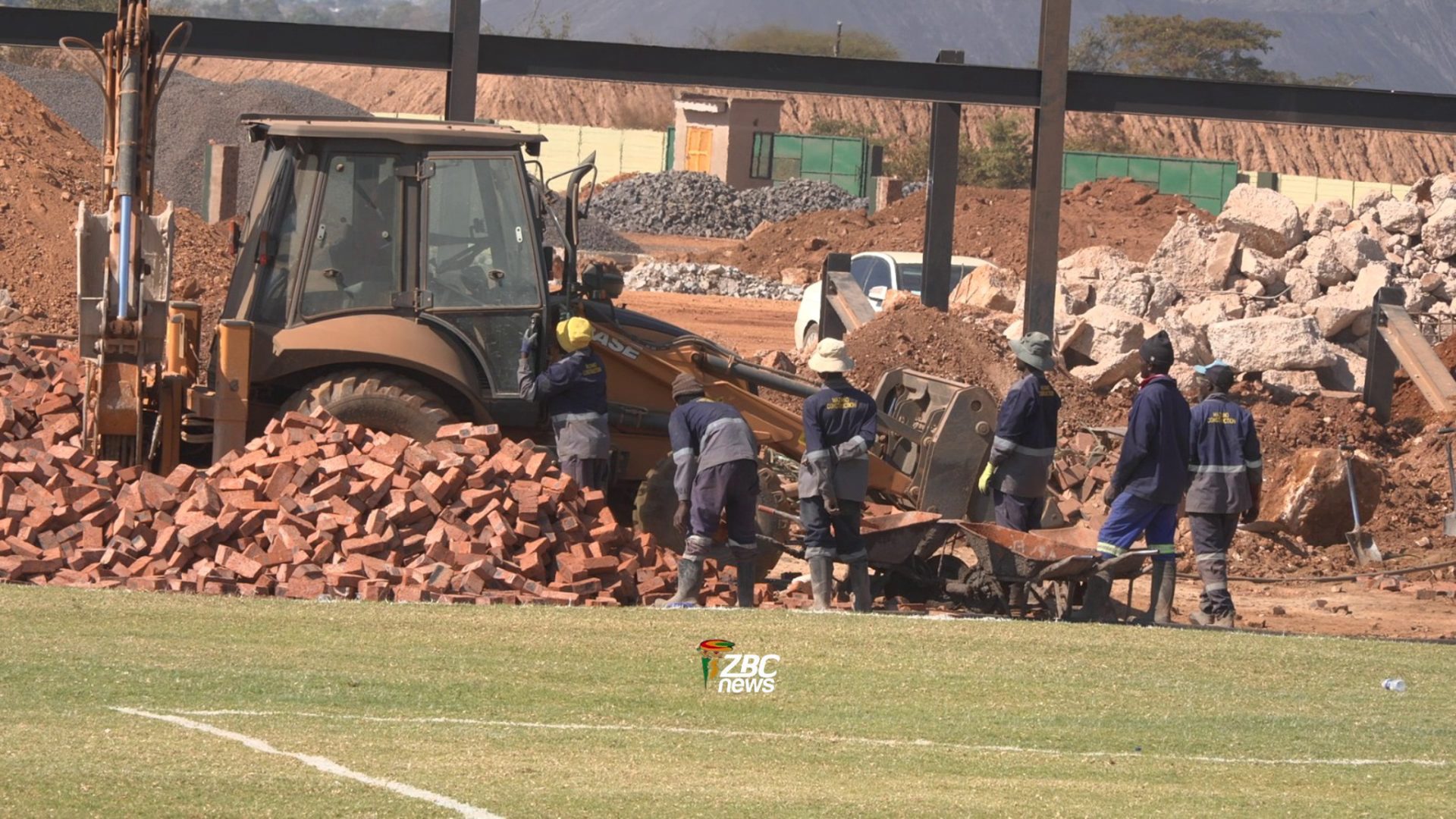
LESS than a year after its official opening, Chahwanda Stadium in Kwekwe is entering a new phase of development, with construction of its B and C Arenas nearing completion as the facility evolves into a CAF-compliant multi-sport complex.
The expansion project is steadily transforming the venue into one of Zimbabwe’s premier sporting destinations, with the additional arenas being built to meet CAF Category Two standards for continental football.
Once complete, the B Arena will accommodate approximately 6 000 spectators, with foundations designed to support future expansion to 28 000 seats. The development also includes modern changing rooms, media facilities, corporate hospitality suites, VIP seating, medical rooms, improved ablution facilities, warm-up areas, floodlighting infrastructure and extensive parking.
A suspended natural grass pitch, engineered to meet CAF drainage standards, will allow year-round use.
Board member Mr Charles Chahwanda said the project extends far beyond the main stadium.
“Currently, we are working on the seating bays and other facilities beyond the main arena. We have a suspended natural turf that meets CAF drainage standards and can be used in any season. All these facilities are being built to host CAF football. This is not a Government project alone; we are also playing our part. The foundations are being designed to allow expansion to 28 000 seats,” he said.
Project architect and manager Mr Singa Ndebele said the development is creating a comprehensive sports precinct rather than simply expanding a football stadium.
“The B Arena has a capacity of 6 000, subject to CAF Category Two approval, and will include a gymnasium, aerobics centre, swimming pools, television and conference rooms. The C Arena will accommodate about 3 000 people. Beyond the football pitches, we are also constructing an Olympic-standard athletics track, five-a-side competition pitches and basketball courts. The B Arena is effectively a stadium on its own,” he said.
Beyond sport, the project is delivering significant economic benefits through job creation and support for local businesses.
Mr Chahwanda said more than 45 companies have participated in the construction programme, creating employment for around 1 500 people, most of them from surrounding communities.
“To date we have engaged more than 45 companies on this project and created employment for about 1 500 people, most of them drawn from the surrounding communities,” he said.
Workers and residents say the project has created both livelihoods and lasting opportunities.
“This project has given me stable employment, and I am now able to provide for my family,” one employee said.
Another beneficiary added:
“Apart from earning an income, we are acquiring construction skills that will benefit us long after this project is completed.”
A local resident described the development as a source of pride for the city.
“We are proud to be part of a project that will put Kwekwe on the sporting map.”
Midlands Minister of State for Provincial Affairs and Devolution Honourable Owen Ncube said the project demonstrates the value of public-private partnerships in modernising Zimbabwe’s sporting infrastructure.
“As Government continues to modernise sporting infrastructure, I would like to commend the private sector for playing its part. Under the Second Republic, sport is not only recreation but a business capable of creating employment and driving economic development,” he said.
Although no completion date has been announced, visible progress on the B and C Arenas signals that Chahwanda Stadium is steadily emerging as a world-class sporting complex capable of hosting continental competitions while leaving a lasting legacy for future generations.

