



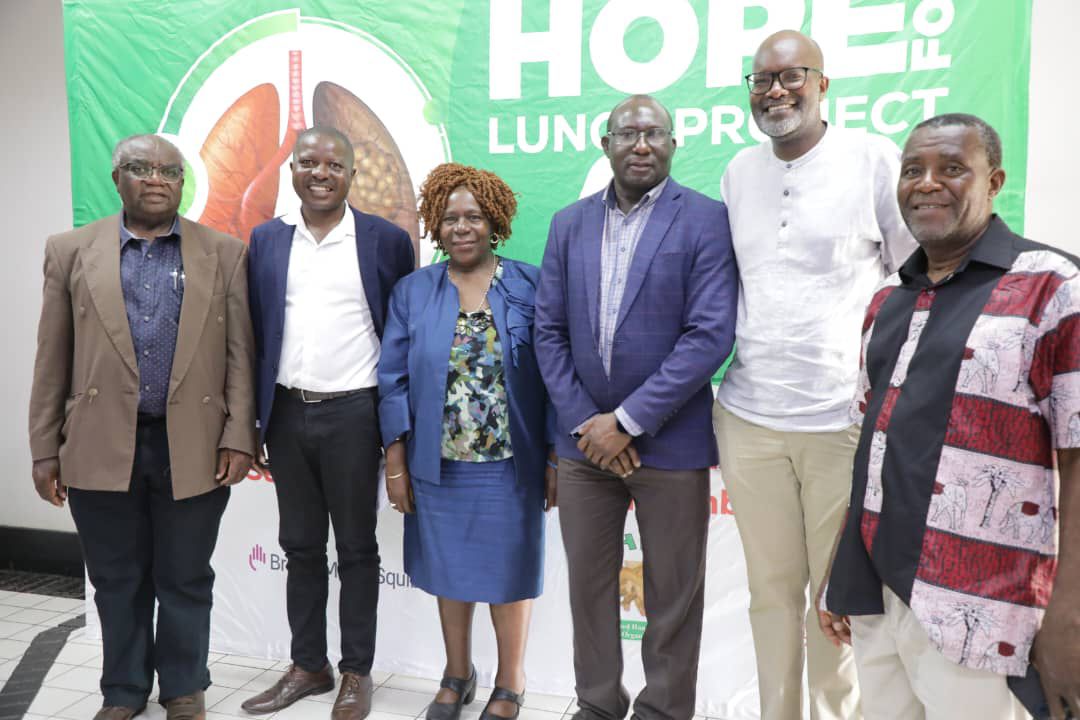
Story by Abigirl Tembo, Health Editor
As part of efforts to tackle the growing burden of lung cancer, Zimbabwe is moving to implement the Hope for Lungs Project, a comprehensive initiative aimed at improving access to early diagnostic services and treatment for lung cancer.
The project, which is being funded by the Bristol Myers Squibb Foundation through the Jointed Hands Welfare Organisation (JHWO), aims to reduce the incidence of lung cancer and improve the quality of life for cancer patients.
An inception meeting held in Kadoma this Friday to kick-start the project, brought together stakeholders from the Ministry of Health and Child Care, healthcare professionals and other partners.
Jointed Hands Welfare Organisation’s executive director Dr Dennis Tobaiwa said, “This funding stream is under the Multinational Lung Cancer Control Program (MLCCP) that is in more than seven other countries. So you will find, under this, we might be invited as a country to join other partners that are purely focused on lung cancer. The goal is improving access to early diagnostic services for lung cancer and the objective number one is to facilitate policy development. The second objective is to assess the risk factors associated with lung cancer and quantify the true lung cancer burden in targeted populations and standard settings so we don’t want to shoot in the dark.”
“Cancer remains at quaternary and central level, there is not much cancer treatment happening at district level. Cancer cases have been rising over the years. So for the modifiable risk factors we are talking about harmful use of alcohol, tobacco use, unhealthy diets, inactivity and environmental factors. But then, there are other genetic factors and so forth. Tobacco is the single largest causative agent of lung cancer accounting for 80 percent of deaths. 80 to 90 percent of cancer patients are diagnosed at an advanced stage which is stage 3 or 4 which is not good. Several delays in the health systems occur. Cancer is still at provincial and central hospitals but the backbone of our healthcare system is at the district. Cancer is specialised and difficult to diagnose, it needs a high index of suspicion,” Director-Non Communicable Diseases in the Ministry of Health and Child Care Dr Justice Mudavanhu said.
Renowned oncologist Dr Anna Mary Nyakabau hailed the project, which will target 7 districts and reach approximately 2.5 million people, with a focus on high-risk populations such as miners, smokers, and those exposed to passive smoke.
“We are going to be looking at raising awareness on lung cancer and other cancers as well. We are also going to be looking at early detection of lung cancer. When you detect the disease early, it is more likely to be curable, whether it is surgery or chemotherapy or radiotherapy such that it improves outcomes of treatment and we get more survivors who also actually help with raising awareness. We are actually going to get better awareness on cancer in the country and this also reduces stigma such that more people are willing to go and listen to people talking about cancer because right now, mention the word cancer, people are so scared that sometimes they don’t even want to go and listen or even just to go anywhere near because they think cancer is equal to death or cancer is equal to pain,” Dr Nyakabau said.
According to the World Health Organisation, lung cancer is one of the leading causes of cancer deaths worldwide, accounting for approximately 1.8 million deaths annually.
In Zimbabwe, an estimated 1 200 new cases of lung cancer are diagnosed annually, resulting in around 800 deaths.

